
600-HOUR PROFESSIONAL TRAINING · 2026 COHORT OPEN
Become an
Ayurvedic Wellness Educator & Counselor
Heal yourself. Guide others. Bring ancient wisdom into classrooms, kitchens, and communities. A 600-hour, trauma-informed training founded and led by a POC practitioner.
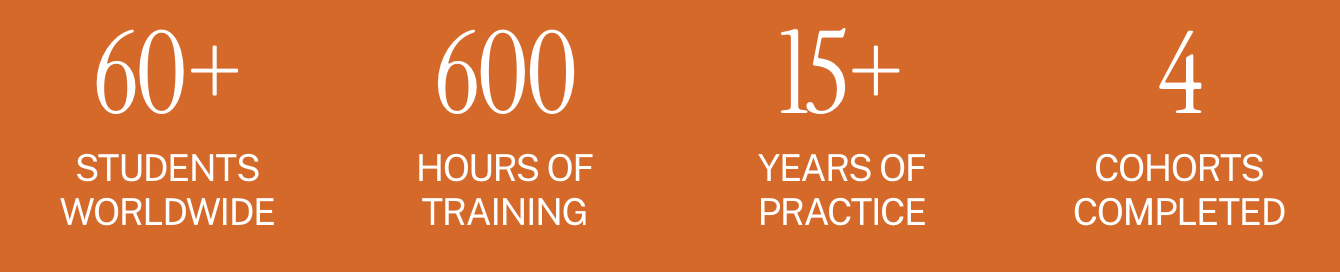
60+
600
STUDENTS WORLDWIDE
HOURS OF TRAINING
4
15+
COHORTS COMPLETED
YEARS OF PRACTICE
PUBLICATIONS & CLIENTS OUR TEACHERS HAVE WORKED WITH

















WHO THIS IS FOR
You've felt the call to
share this wisdom.
Maybe you discovered Ayurveda after years of trying to heal from burnout, anxiety, or a body that felt out of sync. Maybe you're a yoga teacher, herbalist, therapist, or wellness professional who keeps circling back to these ancient teachings. Maybe you simply know, in your bones, that this is what you're meant to do.
This program is for the person who wants to walk this path with depth, not just learn about it from a distance. Our graduates aren't just practitioners. They're educators, facilitators, and community healers who bring Ayurveda into studios, kitchens, clinics, and classrooms. This training is designed to prepare you for all of it.
THIS PROGRAM IS RIGHT FOR YOU IF:
You're ready for meaningful career transformation in the wellness space
✓
You're a yoga teacher, bodyworker, coach, or therapist wanting to deepen your toolkit
✓
You want to lead workshops, classes, and group programs, not just 1:1 sessions
✓
You're drawn to trauma-informed, integrative approaches to healing
✓
You want to learn Ayurveda through embodied self-study, not just memorization
✓
You're seeking a POC-led program that honors the living lineage of this science
✓
You're ready to invest in a community of support and real mentorship
✓
✓
✦ NEWLY EXPANDED PROGRAM
Integrative Ayurvedic Wellness
Educator & Counselor Training
600 hours of immersive, trauma-informed study. Rooted in classical wisdom, designed for modern life. Three distinct courses, one complete certification pathway.
279 HOURS
FOUNDATIONS
OF AYURVEDA
Thursdays, 5–7pm PT
Beginning Oct 1st,2026
The principles that make Ayurveda a complete system of living. Your foundation for everything that follows.
✦ Understand the doshas, constitution, and the five elements
✦ Learn food-as-medicine, seasonal living, and dinacharya
✦ Begin facilitating Ayurvedic workshops and classes
✦ Develop your own daily practice through embodied self-study
THE TRAINING
86 HOURS
INTEGRATIVE
AYURVEDIC RITUALS
Every Other Saturday, 9-11am PT
Beginning Nov 7th,2026
The art of self-care as medicine.
Embodied practices that restore
nervous system balance.
✦ Herbal medicine, body therapies,
and ritual practices
✦ Nervous system regulation
through an Ayurvedic lens
✦ Lead group ritual programs
and workshops
✦ Integrate into yoga, bodywork,
or coaching practices
30 HOURS
BUILDING AN
AYURVEDIC BUSINESS
2nd Saturdays , 11:30am-1:30pm PT
Beginning Feb 13th,2027
From practice to profession. The
practical skills to build a thriving,
sustainable wellness career.
✦ Workshop facilitation and
group program design
✦ Marketing your Ayurvedic
practice authentically
✦ Pricing, packaging, and online education strategies
✦ Collaborate with studios, clinics,
and community orgs
✦ NEWLY EXPANDED PROGRAM
Integrative Ayurvedic Wellness
Educator & Counselor Training
600 hours of immersive, trauma-informed study. Rooted in classical wisdom, designed for modern life. Three distinct courses, one complete certification pathway.
279 HOURS
FOUNDATIONS OF AYURVEDA
The principles that make Ayurveda a complete system of living. Your foundation for everything that follows.
Thursdays, 5–7pm PT
Beginning Oct 1st,2026
✦ Understand the doshas, constitution, and the five elements
✦ Learn food-as-medicine, seasonal living, and dinacharya
✦ Begin facilitating Ayurvedic workshops and classes
✦ Develop your own daily practice through embodied self-study
THE TRAINING
86 HOURS
INTEGRATIVE
AYURVEDIC RITUALS
The art of self-care as medicine. Embodied practices that restore nervous system balance.
✦ Herbal medicine, body therapies, and ritual practices
✦ Nervous system regulation through an Ayurvedic lens
✦ Lead group ritual programs and workshops
✦ Integrate into yoga, bodywork, or coaching practices
Every Other Saturday, 9-11am PT
Beginning Nov 7th,2026
BUILDING AN
AYURVEDIC BUSINESS
2nd Saturdays , 11:30am-1:30pm PT
Beginning Feb 13th,2027
✦ Workshop facilitation and group program design
✦ Marketing your Ayurvedic practice authentically
✦ Pricing, packaging, and online education strategies
✦ Collaborate with studios, clinics, and community orgs
30 HOURS
From practice to profession. The practical skills to build a thriving, sustainable wellness career.
FULL COURSE CURRICULUMS
-
I. FOUNDATIONS OF AYURVEDA
A. Introduction to Ayurveda: How it is Defined
B. History of Ayurveda: Lineage and Texts
C. Sankhya Philosophy: From Primordial Nature to Human Form
II. AYURVEDIC CONCEPTSA. Prakruti and Vikruti: Constitutions and Imbalances
B. Tri-Dosha: Three Mind-Body Constitutions (Vata, Pitti, Kapha)
C. Gunas: 20 Opposite Qualities
D. Sub-Doshas: 5 Additional Homes for Each Dosha
III. AYURVEDIC THEORIES
A. Doshas: Mind-Body Constitutions
B. Srotas, Dhatus: Physiology of Tissues and Channels
C. Agni: Digestive Fire and Gut-Brain Connection
D. Ama: Undigested Food, Unhealthy Bacteria
E. Malas: Waste Products, Elimination and Detoxification
F. Prana, Tejas, Ojas: Subtle Essences of our Being
G. Sattva, Rajas and Tamas: Mental Constitutions - Clarity, Activity and
Dullness
IV. VIHARA: AYURVEDIC LIFESTYLE
A. Dinacharya: Daily Routines
1. Creating a Daily Routine
2. Outlining Traditional Routine
3. Role of Abhyanga (self-massage), Nasya (nose oil application), TongueScraping, Showering and More
B. Rtucharya: Seasonal Routines
4. Role of Diet and Exercise Based on Seasons
5. Relationships of Doshas to Seasons
6. Sandhi: Seasonal Changes or Joints
C. Three Pillars: Food, Sleep, and Energy Regulation
7. Meditation
8. Exercise
9. Sleep
10. Fasting
V. AHARA RASA: FOOD AS MEDICINE
A. Rasas: 6 Tastes and Elemental Make-Up
B. Food for Doshas
C. Food for Seasons
D. Cooking for Each Dosha
E. Dairy, Meat, Wheat
F. Ayurvedic Perspective on Modern Diets
VI. AYURVEDIC PATHOLOGY
A. Samprapti: 6 Stage Disease Process
B. Panchakarma: What it is, Theoretical Process and Understanding
C. Sensory Therapies: Sight, Sound, Smell, Taste and Touch
D. Nidana: Factors Causing Imbalance
VII. DRAVYA GUNA SHASTRA: HERBAL MEDICINE
A. Using Kitchen Herbs
B. Theory and Application of Herbal Remedies
C. Herbs Included: Ginger, Turmeric, Cumin, Coriander, Cilantro, Dill, Parsley, Triphala, Ajwain, Cardamom, Cinnamon, Fennel, Garlic, Clove, Nutmeg, Hing and More
D. Herbal Formulas: Teas, Infusions and Tinctures
VIII. COUNSELING SKILLS
A. Case Consultations
B. Real-Life Examples
C. Patient-Client Relationship
IX. Integrative Application
A. How These Principles can be Modernized
B. Social Justice Advocacy
C. How Your Practice of Ayurveda Shapes Your Clients
X. Sister Sciences
A. Jyotish
B. Pediatrics
C. Pre- and Post-Natal
D. Yoga
E. Counseling
-
I. INTRODUCTION TO INTEGRATIVE AYURVEDA
A. What is Integrative Ayurveda?
B. Principles of Integrative Practice
C. Pancha Maya Kosha Model: The 5 Sheaths
D. What is Trauma?
1. Trauma-Informed Care
E. Compassion-Based Approach Defined
F. Ritual vs. Routine
G. What is a Highly Sensitive Person?
H. Empathy and Boundaries
I. Mindful Listening
J. What is Health?
K. Loneliness Epidemic
II. DIGESTIVE ALLIES
A. Enteric Nervous System: Gut-Brain Connection
B. Trauma and Digestion
C. Microbiome
D. Diet and Doshas
E. Food Activism
F. Local, Organic, Heirloom Foods
G. Honoring Indigenous Food Cultures
H. Nourishment and Boundaries
I. Herbal Allies for Digestion
III. BREATH ALLIES
A. Environmental Crisis and Air Pollution
B. Lungs and Grief
C. Breath Integral to All Life
D. What is Prana?
E. Introduction to Pranayama
F. Herbal Allies for Breath
IV. NERVOUS SYSTEM ALLIES
A. What is the Nervous System? How Can We Broaden Our Understanding of
it?
B. Interconnection
C. Stress Response, Window of Tolerance
D. Trauma States
E. Relax, Restore, Nourish
F. Restorative Yoga
G. Sensory Overload
H. Herbal Allies for the Nervous System
V. HEART ALLIES
A. Emotional Body
B. Mental Health
C. The Heart as the Seat of the Mind
D. Compassion for Self, Others and World
E. Herbal Allies for the Heart
VI. FEMALE HEALTH ALLIES
A. Understanding Female Cycles
B. Nourishing Herbs and Diet
C. Supportive Lifestyle Practices
D. Meditation for Vitality
VII. RECIPE BOOKS AND PLANT ALLY GUIDES
A. Spring
B. Winter
C. Fall
D. Summer
-
I. BUILDING AN AYURVEDIC BUSINESS FROM THE GROUND UP
A. Mission, Vision, Values
B. 8 Limbs of Yoga and 4 Aims of Life
C. Values Assessment
II. SOFTWARE
A. Calendar, Client Notes, Finances
III. HIPAA
A. What You Need to Know
IV. SCOPE OF PRACTICE
A. What is Your Scope of Practice?
B. When to Refer Out
V. MULTI-MODAL TEAM APPROACH
A. How to Work With Practitioners in Other Fields
VI. CLIENT RELATIONSHIP AND BOUNDARIES
A. Strengthen Boundaries Without Losing Empathy
VII. CLIENT INTAKE: STRENGTHEN SKILL SET
A. Being Present
B. Mindful Listening
C. Attunement
D. Non-Violent Communication
VIII. CASE CONSULTATION
A. Share and Learn Within Community
Enroll in the Full 600-Hour Program
Take all three courses together as a cohort and receive complete certification, business mentorship, live weekly sessions with Anjali, and access to our graduate community. À la carte enrollment is also available for individual courses.
$7,000
Full Program · Payment plans available
COURSE DATES
-
Weekly Classes:
Thursdays, 5:00pm–7:00pm Pacific Time2026
October
October 1 – First Class (5:00pm–7:00pm)
October 2-4 – Opening Retreat (9:00am–5:00pm, 3 days)
October 8 – Class (5:00pm–7:00pm)
October 15 – Class (5:00pm–7:00pm)
October 22 – Class (5:00pm–7:00pm)
October 29 – Class (5:00pm–7:00pm)
November
November 5 – Class (5:00pm–7:00pm)
November 12 – Class (5:00pm–7:00pm)
November 19 – Class (5:00pm–7:00pm)
November 26 – No class (holiday)
December
December 3 – Class (5:00pm–7:00pm)
December 10 – Class (5:00pm–7:00pm)
December 17 – Class (5:00pm–7:00pm)
December 24 – No class (holiday)
December 31 – No class (holiday)
2027
January
January 7 – Class (5:00pm–7:00pm)
January 14 – Class (5:00pm–7:00pm)
January 21 – Class (5:00pm–7:00pm)
January 28 – Class (5:00pm–7:00pm)
February
February 4 – Class (5:00pm–7:00pm)
February 11 – Class (5:00pm–7:00pm)
February 18 – Class (5:00pm–7:00pm)
February 25 – Class (5:00pm–7:00pm)
March
March 4 – Class (5:00pm–7:00pm)
March 11 – Class (5:00pm–7:00pm)
March 18 – Class (5:00pm–7:00pm)
March 25 – Class (5:00pm–7:00pm)
April
April 1 – Class (5:00pm–7:00pm)
April 8 – Class (5:00pm–7:00pm)
April 15 – Class (5:00pm–7:00pm)
April 22 – Class (5:00pm–7:00pm)
April 29 – Class (5:00pm–7:00pm)
MayMay 6 – Class (5:00pm–7:00pm)
May 13 – Class (5:00pm–7:00pm)
May 15-16 – Mid-Retreat (9:00am–5:00pm, 2 days)
May 20 – Class (5:00pm–7:00pm)
May 27 – Class (5:00pm–7:00pm)
June
June 3 – Class (5:00pm–7:00pm)
June 10 – Class (5:00pm–7:00pm)
June 17 – Class (5:00pm–7:00pm)
June 24 – Class (5:00pm–7:00pm)
July
July 1 – Class (5:00pm–7:00pm)
July 8 – Class (5:00pm–7:00pm)
July 15 – Class (5:00pm–7:00pm)
July 22 – Class (5:00pm–7:00pm)
July 29 – Class (5:00pm–7:00pm)
August
August 5 – Class (5:00pm–7:00pm)
August 12 – Class (5:00pm–7:00pm)
August 19 – Class (5:00pm–7:00pm)
August 26 – Class (5:00pm–7:00pm)
September
September 2 – Class (5:00pm–7:00pm)
September 9 – Class (5:00pm–7:00pm)
September 16 – Class (5:00pm–7:00pm)
September 23 – Class (5:00pm–7:00pm)
September 30 – Class (5:00pm–7:00pm)
October
October 7 – Class (5:00pm–7:00pm)
October 14 – Class (5:00pm–7:00pm)
October 21 – Class (5:00pm–7:00pm)
October 28 – Class (5:00pm–7:00pm)
November
November 4 – Class (5:00pm–7:00pm)
November 11 – Class (5:00pm–7:00pm)
November 18 – Class (5:00pm–7:00pm)
November 25 – No class (holiday)
December
December 2 – Class (5:00pm–7:00pm)
December 9 – Class (5:00pm–7:00pm)
December 16 – Class (5:00pm–7:00pm)
December 23 – Class (5:00pm–7:00pm)
December 30 – Class (5:00pm–7:00pm)
2028
January
January 6 – Class (5:00pm–7:00pm)
January 13 – Class (5:00pm–7:00pm)
January 20 – Class (5:00pm–7:00pm)
January 27 – Class (5:00pm–7:00pm)
January 28-30 – Final Retreat (9:00am–5:00pm, 3 days)
PROGRAM OVERVIEW
Program Start Date: October 1, 2026
Program End Date: January 30, 2028
Total Duration: Approximately 16 months
RETREATS
Opening Retreat: October 2-4, 2026 (3 days)
Mid Retreat: May 15-16, 2027 (2 days)
Final Retreat: January 28-30, 2028 (3 days)
Weekly Commitment:Thursdays, 5:00pm–7:00pm Pacific Time
*All dates and times are subject to change.
Students will be notified of any schedule adjustments.
-
Bi-Weekly Classes:
Every Other Saturday, 9:00am–11:00am PT2026
November
November 7 – Class (9:00am–11:00am)
November 21 – Class (9:00am–11:00am)
December
December 5 – Class (9:00am–11:00am)
December 19 – Class (9:00am–11:00am)
2027
January
January 2 – No class (holiday)
January 16 – Class (9:00am–11:00am)
January 30 – Class (9:00am–11:00am)
February
February 13 – Class (9:00am–11:00am)
February 27 – Class (9:00am–11:00am)
March
March 13 – Class (9:00am–11:00am)
March 27 – Class (9:00am–11:00am)
April
April 10 – Class (9:00am–11:00am)
April 24 – Class (9:00am–11:00am)
May
May 8 – Class (9:00am–11:00am)
May 22 – Class (9:00am–11:00am)
June
June 5 – Class (9:00am–11:00am)
June 19 – Class (9:00am–11:00am)
July
July 3 – Class (9:00am–11:00am)
July 17 – Class (9:00am–11:00am)
July 31 – Class (9:00am–11:00am)
August
August 14 – Class (9:00am–11:00am)
August 28 – Class (9:00am–11:00am)
September
September 11 – Class (9:00am–11:00am)
September 25 – Class (9:00am–11:00am)
October
October 9 – Class (9:00am–11:00am)
October 23 – Class (9:00am–11:00am)
November
November 6 – Class (9:00am–11:00am)
November 20 – Class (9:00am–11:00am)
December
December 4 – Class (9:00am–11:00am)
December 18 – Class (9:00am–11:00am)
2028
January
January 1 – No class (holiday)
January 15 – Class (9:00am–11:00am)
January 29 – Class (9:00am–11:00am)
January 29 – Class (9:00am–11:00am)
February
February 12 – Class (9:00am–11:00am)
PROGRAM OVERVIEW
Program Start Date: November 7, 2026
Program End Date: February 12, 2028
Total Duration: Approximately 15 months
Bi-Weekly Commitment:
Every Other Saturday, 9:00am–11:00am Pacific Time
All dates and times are subject to change.
Students will be notified of any schedule adjustments.
-
Monthly Classes:
Second Saturday of Each Month, 11:30am–1:30pm PST2027
February
February 13 – Class (11:30am–1:30pm)
March
March 13 – Class (11:30am–1:30pm)
April
April 10 – Class (11:30am–1:30pm)
May
May 8 – Class (11:30am–1:30pm)
June
June 5 – Class (11:30am–1:30pm)
July
July 3 – Class (11:30am–1:30pm)
August
August 14 – Class (11:30am–1:30pm)
September
September 11 – Class (11:30am–1:30pm)
October
October 9 – Class (11:30am–1:30pm)
November
November 6 – Class (11:30am–1:30pm)
December
December 4 – Class (11:30am–1:30pm)
2028
January
January 1 – No class (holiday)
February
February 12 – Class (11:30am–1:30pm)
March
March 11 – Class (11:30am–1:30pm)
April
April 8 – Class (11:30am–1:30pm)
May
May 6 – Class (11:30am–1:30pm)
PROGRAM OVERVIEW
Program Start Date: February 13, 2027
Program End Date: May 6, 2028
Total Duration: Approximately 15 months
Monthly Commitment:
Second Saturday of Each Month, 11:30am–1:30pm Pacific Time
All dates and times are subject to change.
Students will be notified of any schedule adjustments.
FULL COURSE CURRICULUMS
-
I. FOUNDATIONS OF AYURVEDA
A. Introduction to Ayurveda: How it is Defined
B. History of Ayurveda: Lineage and Texts
C. Sankhya Philosophy: From Primordial Nature to Human Form
II. AYURVEDIC CONCEPTSA. Prakruti and Vikruti: Constitutions and Imbalances
B. Tri-Dosha: Three Mind-Body Constitutions (Vata, Pitti, Kapha)
C. Gunas: 20 Opposite Qualities
D. Sub-Doshas: 5 Additional Homes for Each Dosha
III. AYURVEDIC THEORIES
A. Doshas: Mind-Body Constitutions
B. Srotas, Dhatus: Physiology of Tissues and Channels
C. Agni: Digestive Fire and Gut-Brain Connection
D. Ama: Undigested Food, Unhealthy Bacteria
E. Malas: Waste Products, Elimination and Detoxification
F. Prana, Tejas, Ojas: Subtle Essences of our Being
G. Sattva, Rajas and Tamas: Mental Constitutions - Clarity, Activity and
Dullness
IV. VIHARA: AYURVEDIC LIFESTYLE
A. Dinacharya: Daily Routines
1. Creating a Daily Routine
2. Outlining Traditional Routine
3. Role of Abhyanga (self-massage), Nasya (nose oil application), TongueScraping, Showering and More
B. Rtucharya: Seasonal Routines
4. Role of Diet and Exercise Based on Seasons
5. Relationships of Doshas to Seasons
6. Sandhi: Seasonal Changes or Joints
C. Three Pillars: Food, Sleep, and Energy Regulation
7. Meditation
8. Exercise
9. Sleep
10. Fasting
V. AHARA RASA: FOOD AS MEDICINE
A. Rasas: 6 Tastes and Elemental Make-Up
B. Food for Doshas
C. Food for Seasons
D. Cooking for Each Dosha
E. Dairy, Meat, Wheat
F. Ayurvedic Perspective on Modern Diets
VI. AYURVEDIC PATHOLOGY
A. Samprapti: 6 Stage Disease Process
B. Panchakarma: What it is, Theoretical Process and Understanding
C. Sensory Therapies: Sight, Sound, Smell, Taste and Touch
D. Nidana: Factors Causing Imbalance
VII. DRAVYA GUNA SHASTRA: HERBAL MEDICINE
A. Using Kitchen Herbs
B. Theory and Application of Herbal Remedies
C. Herbs Included: Ginger, Turmeric, Cumin, Coriander, Cilantro, Dill, Parsley, Triphala, Ajwain, Cardamom, Cinnamon, Fennel, Garlic, Clove, Nutmeg, Hing and More
D. Herbal Formulas: Teas, Infusions and Tinctures
VIII. COUNSELING SKILLS
A. Case Consultations
B. Real-Life Examples
C. Patient-Client Relationship
IX. Integrative Application
A. How These Principles can be Modernized
B. Social Justice Advocacy
C. How Your Practice of Ayurveda Shapes Your Clients
X. Sister Sciences
A. Jyotish
B. Pediatrics
C. Pre- and Post-Natal
D. Yoga
E. Counseling
-
I. INTRODUCTION TO INTEGRATIVE AYURVEDA
A. What is Integrative Ayurveda?
B. Principles of Integrative Practice
C. Pancha Maya Kosha Model: The 5 Sheaths
D. What is Trauma?
1. Trauma-Informed Care
E. Compassion-Based Approach Defined
F. Ritual vs. Routine
G. What is a Highly Sensitive Person?
H. Empathy and Boundaries
I. Mindful Listening
J. What is Health?
K. Loneliness Epidemic
II. DIGESTIVE ALLIES
A. Enteric Nervous System: Gut-Brain Connection
B. Trauma and Digestion
C. Microbiome
D. Diet and Doshas
E. Food Activism
F. Local, Organic, Heirloom Foods
G. Honoring Indigenous Food Cultures
H. Nourishment and Boundaries
I. Herbal Allies for Digestion
III. BREATH ALLIES
A. Environmental Crisis and Air Pollution
B. Lungs and Grief
C. Breath Integral to All Life
D. What is Prana?
E. Introduction to Pranayama
F. Herbal Allies for Breath
IV. NERVOUS SYSTEM ALLIES
A. What is the Nervous System? How Can We Broaden Our Understanding of
it?
B. Interconnection
C. Stress Response, Window of Tolerance
D. Trauma States
E. Relax, Restore, Nourish
F. Restorative Yoga
G. Sensory Overload
H. Herbal Allies for the Nervous System
V. HEART ALLIES
A. Emotional Body
B. Mental Health
C. The Heart as the Seat of the Mind
D. Compassion for Self, Others and World
E. Herbal Allies for the Heart
VI. FEMALE HEALTH ALLIES
A. Understanding Female Cycles
B. Nourishing Herbs and Diet
C. Supportive Lifestyle Practices
D. Meditation for Vitality
VII. RECIPE BOOKS AND PLANT ALLY GUIDES
A. Spring
B. Winter
C. Fall
D. Summer
-
I. BUILDING AN AYURVEDIC BUSINESS FROM THE GROUND UP
A. Mission, Vision, Values
B. 8 Limbs of Yoga and 4 Aims of Life
C. Values Assessment
II. SOFTWARE
A. Calendar, Client Notes, Finances
III. HIPAA
A. What You Need to Know
IV. SCOPE OF PRACTICE
A. What is Your Scope of Practice?
B. When to Refer Out
V. MULTI-MODAL TEAM APPROACH
A. How to Work With Practitioners in Other Fields
VI. CLIENT RELATIONSHIP AND BOUNDARIES
A. Strengthen Boundaries Without Losing Empathy
VII. CLIENT INTAKE: STRENGTHEN SKILL SET
A. Being Present
B. Mindful Listening
C. Attunement
D. Non-Violent Communication
VIII. CASE CONSULTATION
A. Share and Learn Within Community
COURSE DATES
-
Weekly Classes:
Thursdays, 5:00pm–7:00pm Pacific Time2026
October
October 1 – First Class (5:00pm–7:00pm)
October 2-4 – Opening Retreat (9:00am–5:00pm, 3 days)
October 8 – Class (5:00pm–7:00pm)
October 15 – Class (5:00pm–7:00pm)
October 22 – Class (5:00pm–7:00pm)
October 29 – Class (5:00pm–7:00pm)
November
November 5 – Class (5:00pm–7:00pm)
November 12 – Class (5:00pm–7:00pm)
November 19 – Class (5:00pm–7:00pm)
November 26 – No class (holiday)
December
December 3 – Class (5:00pm–7:00pm)
December 10 – Class (5:00pm–7:00pm)
December 17 – Class (5:00pm–7:00pm)
December 24 – No class (holiday)
December 31 – No class (holiday)
2027
January
January 7 – Class (5:00pm–7:00pm)
January 14 – Class (5:00pm–7:00pm)
January 21 – Class (5:00pm–7:00pm)
January 28 – Class (5:00pm–7:00pm)
February
February 4 – Class (5:00pm–7:00pm)
February 11 – Class (5:00pm–7:00pm)
February 18 – Class (5:00pm–7:00pm)
February 25 – Class (5:00pm–7:00pm)
March
March 4 – Class (5:00pm–7:00pm)
March 11 – Class (5:00pm–7:00pm)
March 18 – Class (5:00pm–7:00pm)
March 25 – Class (5:00pm–7:00pm)
April
April 1 – Class (5:00pm–7:00pm)
April 8 – Class (5:00pm–7:00pm)
April 15 – Class (5:00pm–7:00pm)
April 22 – Class (5:00pm–7:00pm)
April 29 – Class (5:00pm–7:00pm)
MayMay 6 – Class (5:00pm–7:00pm)
May 13 – Class (5:00pm–7:00pm)
May 15-16 – Mid-Retreat (9:00am–5:00pm, 2 days)
May 20 – Class (5:00pm–7:00pm)
May 27 – Class (5:00pm–7:00pm)
June
June 3 – Class (5:00pm–7:00pm)
June 10 – Class (5:00pm–7:00pm)
June 17 – Class (5:00pm–7:00pm)
June 24 – Class (5:00pm–7:00pm)
July
July 1 – Class (5:00pm–7:00pm)
July 8 – Class (5:00pm–7:00pm)
July 15 – Class (5:00pm–7:00pm)
July 22 – Class (5:00pm–7:00pm)
July 29 – Class (5:00pm–7:00pm)
August
August 5 – Class (5:00pm–7:00pm)
August 12 – Class (5:00pm–7:00pm)
August 19 – Class (5:00pm–7:00pm)
August 26 – Class (5:00pm–7:00pm)
September
September 2 – Class (5:00pm–7:00pm)
September 9 – Class (5:00pm–7:00pm)
September 16 – Class (5:00pm–7:00pm)
September 23 – Class (5:00pm–7:00pm)
September 30 – Class (5:00pm–7:00pm)
October
October 7 – Class (5:00pm–7:00pm)
October 14 – Class (5:00pm–7:00pm)
October 21 – Class (5:00pm–7:00pm)
October 28 – Class (5:00pm–7:00pm)
November
November 4 – Class (5:00pm–7:00pm)
November 11 – Class (5:00pm–7:00pm)
November 18 – Class (5:00pm–7:00pm)
November 25 – No class (holiday)
December
December 2 – Class (5:00pm–7:00pm)
December 9 – Class (5:00pm–7:00pm)
December 16 – Class (5:00pm–7:00pm)
December 23 – Class (5:00pm–7:00pm)
December 30 – Class (5:00pm–7:00pm)
2028
January
January 6 – Class (5:00pm–7:00pm)
January 13 – Class (5:00pm–7:00pm)
January 20 – Class (5:00pm–7:00pm)
January 27 – Class (5:00pm–7:00pm)
January 28-30 – Final Retreat (9:00am–5:00pm, 3 days)
PROGRAM OVERVIEW
Program Start Date: October 1, 2026
Program End Date: January 30, 2028
Total Duration: Approximately 16 months
RETREATS
Opening Retreat: October 2-4, 2026 (3 days)
Mid Retreat: May 15-16, 2027 (2 days)
Final Retreat: January 28-30, 2028 (3 days)
Weekly Commitment:Thursdays, 5:00pm–7:00pm Pacific Time
*All dates and times are subject to change.
Students will be notified of any schedule adjustments.
-
Bi-Weekly Classes:
Every Other Saturday, 9:00am–11:00am PT2026
November
November 7 – Class (9:00am–11:00am)
November 21 – Class (9:00am–11:00am)
December
December 5 – Class (9:00am–11:00am)
December 19 – Class (9:00am–11:00am)
2027
January
January 2 – No class (holiday)
January 16 – Class (9:00am–11:00am)
January 30 – Class (9:00am–11:00am)
February
February 13 – Class (9:00am–11:00am)
February 27 – Class (9:00am–11:00am)
March
March 13 – Class (9:00am–11:00am)
March 27 – Class (9:00am–11:00am)
April
April 10 – Class (9:00am–11:00am)
April 24 – Class (9:00am–11:00am)
May
May 8 – Class (9:00am–11:00am)
May 22 – Class (9:00am–11:00am)
June
June 5 – Class (9:00am–11:00am)
June 19 – Class (9:00am–11:00am)
July
July 3 – Class (9:00am–11:00am)
July 17 – Class (9:00am–11:00am)
July 31 – Class (9:00am–11:00am)
August
August 14 – Class (9:00am–11:00am)
August 28 – Class (9:00am–11:00am)
September
September 11 – Class (9:00am–11:00am)
September 25 – Class (9:00am–11:00am)
October
October 9 – Class (9:00am–11:00am)
October 23 – Class (9:00am–11:00am)
November
November 6 – Class (9:00am–11:00am)
November 20 – Class (9:00am–11:00am)
December
December 4 – Class (9:00am–11:00am)
December 18 – Class (9:00am–11:00am)
2028
January
January 1 – No class (holiday)
January 15 – Class (9:00am–11:00am)
January 29 – Class (9:00am–11:00am)
January 29 – Class (9:00am–11:00am)
February
February 12 – Class (9:00am–11:00am)
PROGRAM OVERVIEW
Program Start Date: November 7, 2026
Program End Date: February 12, 2028
Total Duration: Approximately 15 months
Bi-Weekly Commitment:
Every Other Saturday, 9:00am–11:00am Pacific Time
All dates and times are subject to change.
Students will be notified of any schedule adjustments.
-
Monthly Classes:
Second Saturday of Each Month, 11:30am–1:30pm PST2027
February
February 13 – Class (11:30am–1:30pm)
March
March 13 – Class (11:30am–1:30pm)
April
April 10 – Class (11:30am–1:30pm)
May
May 8 – Class (11:30am–1:30pm)
June
June 5 – Class (11:30am–1:30pm)
July
July 3 – Class (11:30am–1:30pm)
August
August 14 – Class (11:30am–1:30pm)
September
September 11 – Class (11:30am–1:30pm)
October
October 9 – Class (11:30am–1:30pm)
November
November 6 – Class (11:30am–1:30pm)
December
December 4 – Class (11:30am–1:30pm)
2028
January
January 1 – No class (holiday)
February
February 12 – Class (11:30am–1:30pm)
March
March 11 – Class (11:30am–1:30pm)
April
April 8 – Class (11:30am–1:30pm)
May
May 6 – Class (11:30am–1:30pm)
PROGRAM OVERVIEW
Program Start Date: February 13, 2027
Program End Date: May 6, 2028
Total Duration: Approximately 15 months
Monthly Commitment:
Second Saturday of Each Month, 11:30am–1:30pm Pacific Time
All dates and times are subject to change.
Students will be notified of any schedule adjustments.
Enroll in the Full
600-Hour Program
Take all three courses together as a cohort and receive complete certification, business mentorship, live weekly sessions with Anjali, and access to our graduate community. À la carte enrollment is also available for individual courses.
$7,000
Full Program · Payment plans available

WHY MADHYA WAY
Where Ayurveda meets
education, community,
and embodied living.
Trauma-Informed from the Ground Up
Every course, every practice, every conversation is shaped by a compassion-based, trauma-informed framework. Healing requires safety and we build that into everything.
Educator Training, Not Just Counseling
We train you to teach, facilitate, and share. In workshops, group programs, studios, and community spaces. Ayurveda was always meant to live in the world.
POC & Female-Led Faculty
Led by second-generation Ayurvedic practitioner Anjali Deva and a diverse team of expert guest teachers. A course that’s rooted in lineage and is accessible to all.
You Are Part of the Curriculum
Our experiential model requires you to live the teachings. Your own healing journey , with food, sleep, herbs, and daily ritual , is woven into every module.
WHY MADHYA WAY
Where Ayurveda meets education,
community, and embodied living.
Trauma-Informed from the Ground Up
Every course, every practice, every conversation is shaped by a compassion-based, trauma-informed framework. Healing requires safety and we build that into everything.
Educator Training, Not Just Counseling
We train you to teach, facilitate, and share. In workshops, group programs, studios, and community spaces. Ayurveda was always meant to live in the world.
POC & Female-Led Faculty
Led by second-generation Ayurvedic practitioner Anjali Deva and a diverse team of expert guest teachers. A course that’s rooted in lineage and is accessible to all.
You Are Part of the Curriculum
Our experiential model requires you to live the teachings. Your own healing journey , with food, sleep, herbs, and daily ritual , is woven into every module.
GRADUATE OUTCOMES
Our graduates don't just
practice Ayurveda.
They teach it, lead with it, and build with it. Here's where they go after completing the training.
Offer Ayurvedic
Wellness Sessions
1:1 consultations, dosha assessments, and personalized lifestyle guidance for clients.
Integrate Into
Existing Careers
Deepen yoga, bodywork, coaching, or nutrition practices with Ayurvedic knowledge + tools.
Collaborate Across
Healing Communities
Partner with therapists, herbalists, yoga teachers, and wellness organizations in your healing community.
Lead Workshops, Group
& Online Offerings
At yoga studios, wellness centers, + online platforms, teaching Ayurveda to groups in any format.
OUR MISSION
HONORING THE LIVING LINEAGE OF AYURVEDA
Ayurveda has traditionally been passed down through teaching, community, and daily life. Not only through clinical settings. This program honors that lineage.
By training practitioners who can bring Ayurveda into kitchens, classrooms, yoga spaces, and community centers, we are making this wisdom more accessible and alive for modern people.
YOUR LEAD INSTRUCTOR
Taught by someone who has walked this path herself.


ANJALI DEVA
Ayurvedic Practitioner · Educator · Second-Generation Healer
Ayurveda found me through my father, Arun Deva, an Ayurvedic practitioner and my main teacher. But as a first-generation American with divorced parents, my intention was simply to fit in. Years of eating poorly, running on stress, and not sleeping left me with significant anxiety, digestive issues, and eczema. Something deep within kept suggesting they were all connected, but no doctor could tell me how or why.
That question began my journey back to Ayurveda and its three pillars: food, sleep, and energy regulation. When changing my diet started shifting my digestion and eczema, I knew I needed to go deeper. I left college and attended Kerala Ayurveda Academy, and that journey took me to India and across the US to study with doctors, practitioners, and healers who continue to shape how I practice.
Over a decade of study, I've woven together multiple modalities, Western herbalism, self-compassion practices, meditation, yoga, and trauma-informed care. Growing up in a home shaped by addiction and eventually losing my mother to it taught me firsthand how deeply trauma lives in the body. That understanding is at the heart of everything we do here.

✦ BOARD MEMBER WITH CALIFORNIA
ASSOCIATION OF AYURVEDIC MEDICINE
✦ NAMA-CERTIFIED AYURVEDIC PRACTITIONER
✦ KERALA AYURVEDA ACADEMY GRADUATE
✦ CO-AUTHOR OF FROM STRESSED OUT TO STRESS WISE
ACCREDITATIONS
Anjali also sees private clients through her clinical practice, Rooted Rasa, where she offers 1:1 Ayurvedic consultations, personalized treatment plans, and individual wellness sessions in Los Angeles.

UPCOMING GUEST TEACHERS

Meet the passionate faculty for our upcoming cohort


Equity marketing strategist
Ayurvedic yoga therapy
Ayurvedic nutrition cooking
Mental health & digestion
Yoga & sound healing
Yoga therapy accessibility
Culinary & clinical Ayurveda
Panchakarma & trauma care
Meet the passionate faculty for our upcoming cohort
UPCOMING GUEST TEACHERS
Ayurvedic yoga
therapy
Equity marketing
strategist
Mental health
& digestion
Ayurvedic nutrition
cooking
Yoga & sound
healing
Culinary & clinical
Ayurveda
Yoga therapy
accessibility
Panchakarma &
trauma care

TUITION & FAQ
Your questions,
answered honestly.
-
The full program includes all three courses (Foundations of Ayurveda, Integrative Ayurvedic Rituals, and Building an Ayurvedic Business), weekly live sessions with Anjali, live client case studies and cooking classes, access to expert guest teachers, cohort community access, and a pathway to full certification. À la carte courses are available separately.
-
Yes. We offer a limited number of payment plan options for full-program students. Payment plans are available by application — email us directly to discuss options. We've found that our students succeed most with fewer, larger payments, so our plans are structured accordingly.
-
Enrolling in the full program gives you the complete cohort experience, mentorship access, and the full certification pathway. À la carte courses are ideal if you want to explore a single topic area or already hold credentials and want to deepen in a specific direction. Full program pricing represents significant savings vs. individual course pricing combined.
-
This program combines live instruction, recorded content, and independent study hours, giving you both real-time community learning and the flexibility to go deeper at your own pace.
OVERVIEW HOURSFoundations 279
Integrative 86
Business 30
Recorded 120
Homework 95
Total 610 -
No prior formal training is required, though many students come with backgrounds in yoga, bodywork, wellness coaching, or integrative health. What matters most is genuine curiosity, a commitment to your own healing process, and a desire to share this wisdom with others.
-
No! Each class can be taken a la carte. However, in order to become an Ayurvedic Wellness Counselor, you must complete all three courses in the program.
-
Yes. We offer scholarships for reduced tuition, with South Asian students receiving priority. Scholarship spots are limited and separate from full-price enrollment. Apply here.
Full-price enrollment helps make our scholarship program possible. -
Mādhya is a Sanskrit word that translates to "middle." Mādhya way or the middle way is a phrase often used to indicate moderation in all things. For our purposes, Mādhya Way Ayurveda reflects our commitment to practicing a non-harming, integrative, and compassionate approach to Ayurvedic education.
-
Yes, there are live weekly classes on Zoom. In addition, the Foundations course has two 3-day retreats, and the Integrative Course has two 1-day immersions that will be held virtually, and in-person TBD. Click here to find a full list of dates.
-
Absolutely! Use the contact page to send us an email or book a free 30-minute intro and we will find a time to connect with you for a 15-30 minute chat about the course(s).

EARLY BIRD — SAVE $500
Full program discount through August 1st
FULL PROGRAM · BEST VALUE
Integrative Ayurvedic Wellness Educator & Counselor
$6,500
$7,000
Early Bird through Aug 1 · 600 Hours · Complete Certification
✔︎ All 3 courses included
✔︎ Weekly live sessions with Anjali
✔︎ Live case studies & cooking classes
✔︎ Expert guest teacher series
✔︎ Cohort community access
✔︎ Full certification pathway
✔︎ Business mentorship included
Scholarships available for reduced tuition.
South Asian students receive priority.
Apply here →
Interested in donating to our scholarship fund? Head over to our Mādhya Way QTBIPOC Scholarship Fund GoFundMe . Contribute here →
A LA CARTE PRICING
Foundations of Ayurveda 279 Hours
$3,000
Integrative Ayurvedic Rituals
86 Hours
$3,000
Building an Ayurvedic Business
30 Hours
$1,000
À la carte enrollment does not include cohort community access, business mentorship, or the full certification pathway.
TUITION & FAQ
Your questions,
answered honestly.
-
The full program includes all three courses (Foundations of Ayurveda, Integrative Ayurvedic Rituals, and Building an Ayurvedic Business), weekly live sessions with Anjali, live client case studies and cooking classes, access to expert guest teachers, cohort community access, and a pathway to full certification. À la carte courses are available separately.
-
Yes. We offer a limited number of payment plan options for full-program students. Payment plans are available by application — email us directly to discuss options. We've found that our students succeed most with fewer, larger payments, so our plans are structured accordingly.
-
Enrolling in the full program gives you the complete cohort experience, mentorship access, and the full certification pathway. À la carte courses are ideal if you want to explore a single topic area or already hold credentials and want to deepen in a specific direction. Full program pricing represents significant savings vs. individual course pricing combined.
-
This program combines live instruction, recorded content, and independent study hours, giving you both real-time community learning and the flexibility to go deeper at your own pace.
OVERVIEW HOURSFoundations 279
Integrative 86
Business 30
Recorded 120
Homework 95
Total 610 -
No prior formal training is required, though many students come with backgrounds in yoga, bodywork, wellness coaching, or integrative health. What matters most is genuine curiosity, a commitment to your own healing process, and a desire to share this wisdom with others.
-
No! Each class can be taken a la carte. However, in order to become an Ayurvedic Wellness Counselor, you must complete all three courses in the program.
-
Yes. We offer scholarships for reduced tuition, with South Asian students receiving priority. Scholarship spots are limited and separate from full-price enrollment. Apply here.
Full-price enrollment helps make our scholarship program possible. -
Mādhya is a Sanskrit word that translates to "middle." Mādhya way or the middle way is a phrase often used to indicate moderation in all things. For our purposes, Mādhya Way Ayurveda reflects our commitment to practicing a non-harming, integrative, and compassionate approach to Ayurvedic education.
-
Yes, there are live weekly classes on Zoom. In addition, the Foundations course has two 3-day retreats, and the Integrative Course has two 1-day immersions that will be held virtually, and in-person TBD. Click here to find a full list of dates.
-
Absolutely! Use the contact page to send us an email or book a free 30-minute intro and we will find a time to connect with you for a 15-30 minute chat about the course(s).
EARLY BIRD — SAVE $500
Full program discount
through August 1st
FULL PROGRAM · BEST VALUE
Integrative Ayurvedic Wellness Educator & Counselor
$6,500
$7,000
Early Bird through Aug 1 · 600 Hours · Complete Certification
✔︎ All 3 courses included
✔︎ Weekly live sessions with Anjali
✔︎ Live case studies & cooking classes
✔︎ Expert guest teacher series
✔︎ Cohort community access
✔︎ Full certification pathway
✔︎ Business mentorship included
Scholarships available for reduced tuition.
South Asian students receive priority.
Apply here →
Interested in donating to our scholarship fund? Head over to our Mādhya Way QTBIPOC Scholarship Fund GoFundMe . Contribute here →
A LA CARTE PRICING
Foundations of Ayurveda
279 Hours
$3,000
Integrative Ayurvedic Rituals
86 Hours
$3,000
Building an Ayurvedic Business
30 Hours
$1,000
À la carte enrollment does not
include cohort community access,
business mentorship, or the full
certification pathway.
The 2026 cohort is now enrolling. Spots are limited and once they fill, enrollment closes until our next cohort. If you've been circling this for a while, this is your sign.
Ready to begin your
Ayurvedic journey?
